Posts

BREAM - FY2009 Research Summary
Image
Staff: Chief Scientist: Thaddeus J. T. Murdoch, PhD Laboratory Manager: Jessie Hallett, BSc Dive Safety Officer: Robert Fisher, BFA, PADI dive instructor Volunteers: Ian Murdoch; Judie Clee; Jamie Rosser; Peter Hopkin Interns 2009: ACP: Brittany Huntington (RSMAS); Anke Moesinger (DISL) OTEP: Katherine Yates (York) GSEP: Claire Grenfell Visiting Scientists Matt Ajemian, Dauphin Island Sea Lab (BZS: Clee fellowship) Brief Summary Headed by Bermudian Dr. Thaddeus Murdoch, the BREAM: (Bermuda Reef Ecosystem Assessment and Mapping) Programme exists to produce and support multidisciplinary studies of Bermuda’s marine environment and to promote its care. Key to these endeavors is the use of rigorous assessment methodologies, data management, statistical analysis, and habitat mapping using geographic information systems (GIS). BREAM projects in 2009 to date include: · OTEP-funded assessment of most Buoyed Dive Site MPAs · Coral transplantation from wreck near Heritage Wharf, Dockyard · Basel...

RG: Bermuda can take the lead in protecting the Sargasso Sea, Cox indicates in Budget

Bermuda Royal Gazette March 1, 2010 Link Bermuda can take the lead in protecting the Sargasso Sea, Cox indicates in Budget By Amanda Dale Bermuda is spearheading the creation of one of the first high seas marine protected areas (MPAs). The Sargasso Sea could be designated an MPA, protecting its marine life for future generations. Finance Minister and Deputy Premier Paula Cox announced the project during the Budget on Friday, saying it was not only globally important but would also protect the waters of Bermuda. "The health of Bermuda's marine ecosystem is entirely dependent on the health of the wider ocean that surrounds us," she said. "A feasibility study on a project of global importance protecting the Sargasso Sea will be completed in 2010-2011. "The Bermuda Government will be actively investigating...

More and more plastics in Bermuda waters and Sargasso Sea

Image
Plastic collected on Bermuda beaches by BREAM volunteer Judie Clee. Note all plastic pieces are heavily bitten, presumably by turtles and fishes. From the Bermuda Sun newspaper [link] Friday 26th Feb, 2010 Heather Jardin Masses of plastic debris collecting east of BDA Scientists have discovered an area of the North Atlantic Ocean to the east of Bermuda where huge amounts of plastic debris are ­accumulating. The region is said to compare with the well-documented "great Pacific garbage patch. In an interview with the British Broadcasting Corporation earlier this week Kara Lavender Law of the Sea Education Association (SEA) announced the findings of a two-decade-long study. Local scientist Dr. Thad Murdoch is the chief scientist of the Bermuda Reef Ecosystem Assessment and Mapping programme at the Bermuda Zoological Society and said the findings come as "no surprise". "The way the currents move around the Atlantic is very similar to the ­Pacific," Dr. Murdoch expl...

Bermuda's Coral Reefs provide $722 million in value per year

Image
BREAM contributed our coral reef and fish data to aid in the Assessment of the Total Economic Value of Bermuda's Coral Reef ( click for executive summary ), described in the Bermuda Sun article ( link ) out Feb 4th ; and Royal Gazette article out Feb 5th ( link ) Bermuda Sun Feb. 4th 2010 Coral reefs worth an average of $722 million per year Economic benefits include tourism, fisheries and storm protection THURSDAY, FEB. 4: The Department of Conservation Services within the Ministry of the Environment and Sports today released a study on the Total Economic Value (TEV) of Bermuda's Coral Reefs which shows that the annual value of the coral reef ecosystem averages $722 million, potentially amounting to $1.1 billion per year. Bermuda's coral reefs provide substantial economic benefits through coastal protection from storms and hurricanes as well as supporting both the tourism industry and commercial and recreational fisheries. In short they are a fundamental contributor to a...

NY Times - To save the planet - Save the Seas!

Image
To Save the Planet, Save the Seas By DAN LAFFOLEY Published: December 26, 2009 http://www.nytimes.com/2009/12/27/opinion/27lafolley.html?_r=2 FOR the many disappointments of the recent climate talks in Copenhagen, there was at least one clear positive outcome, and that was the progress made on a program called Reducing Emissions From Deforestation and Forest Degradation. Under this program, key elements of which were agreed on at Copenhagen, developing countries would be compensated for preserving forests, peat soils, swamps and fields that are efficient absorbers of carbon dioxide, the primary heat-trapping gas linked to global warming. This approach, which takes advantage of the power of nature itself, is an economical way to store large amounts of carbon. But the program is limited in that it includes only those carbon sinks found on land. We now need to look for similar opportunities to curb climate change in the oceans. Few people may realize it, but in addition to p...

Happy Holidays from the BREAM team

Image
Banded cleaner shrimp (c) Ian Murdoch http://www.bermudaunderwaterphotography.com/

Photo Wednesday - Deep Blue RV Endurance

Image
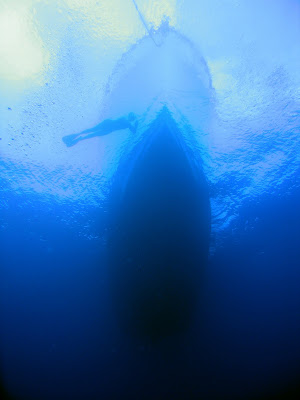
A snorkeler floats suspended at the bow of the Bermuda Zoological Society's RV Endurance [click photo for larger image] (c) T. Murdoch